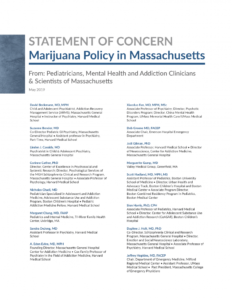
 BOSTON – A consortium of clinicians and scientists from across Massachusetts has joined together to publicly release a “Stat
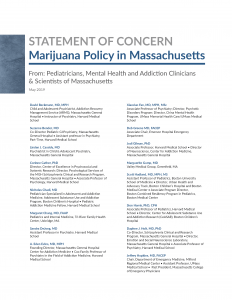 ement of Concern” expressing their disagreement with how marijuana policy is being shaped in the Commonwealth.
According to the Statement of Concern, marijuana is being governed and regulated as if it were an “ordinary commodity”, rather than following a Public Health Framework. This is of concern because scientific evidence clearly establishes that marijuana (and specifically the psychoactive chemical THC) has the potential to do significant harm to public health. Harmful effects include, but are not limited to, the risk of addiction, impaired cognitive function, and increased risk of mental illness (including psychosis).
Yet, despite the fact that negative health effects are manifesting in patient populations across Massachusetts with an increase in the availability of marijuana and THC-containing products (including THC vapes), there is a lack of public awareness about the potential dangers of marijuana/THC.
“When public health is not prioritized in the regulation of addictive substances, the public and our young people are put at risk,” reports the consortium in its Statement of Concern. As a result, the consortium recommends that Massachusetts state marijuana laws and regulations meet key public health standards through the regulatory framework that prioritize population-level health over commercial market interests.
The consortium responsible for the document included over 40 professionals from major medical centers, medical schools, and health-related organizations in Massachusetts. These professionals include clinicians, researchers, scientists, and other health and medical professionals.
The Statement of Concern was created to give an advocacy voice to the professionals who know and understand the science, and clinicians seeing an increase in the negative health impacts of marijuana in their patient populations. The Massachusetts Addiction Prevention Alliance coordinated and supported the consortium through the drafting process of the document in an effort to provide the most up-to-date, clear and validated science on the public health impacts of marijuana/cannabis/THC commercialization. The document’s purpose is to assist our state leaders with their drug policy decisions that serve to protect the health and safety of our youth in the Commonwealth.
It is clear that Lawmakers have always been concerned about the public health impacts of marijuana/cannabis/THC commercialization. This was evident when 121 members of the legislature opposed the law as written in Ballot Question 4 in 2016 and then worked arduously to pass the omnibus bill in 2017 to fix some of the problems with the law. Currently, in Massachusetts, a few of the standards in the public health framework are met in statutory marijuana language (MA General Law). Some standards are met through regulatory language (CCC regulations). A number of the unmet Public Health Standards have been proposed in bills for this 2019 legislative session.
You can read the full Statement of Concern here.
You can also review a detailed analysis of where Massachusetts’ state marijuana laws and regulation falls on public health standards.
Note: Production of the “Statement of Concern” was supported by the Massachusetts Addiction Prevention Alliance, a private, non-partisan, 501c3 organization. Signatories were not compensated for their endorsement of this statement. For comments or inquiries, please email info@mapreventionalliance.org.
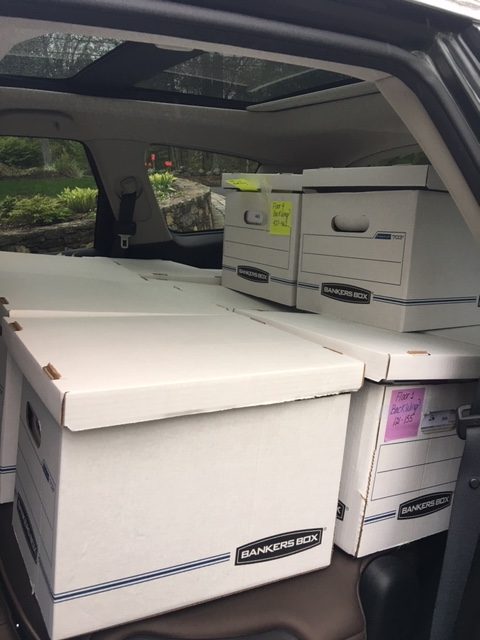
On Wednesday, May 15th, 2019, MAPA successfully hand delivered the Statement of Concern to every Massachusetts legislator, the Cannabis Control Commission and other leading dignitaries. It was a tremendous effort led by a group of strong prevention advocates. Here are some photos of their efforts.



CALL TO ACTION: The Statement of Concern offers practical utility for prevention advocates. When engaging a legislator around the Public Health Framework, prevention advocates are encouraged to request a meeting with their legislator. Share this document and ask them to please support legislation that strengthens public health standards of marijuana regulation and control. Ask what they are already doing. And ask what else they can do to be helpful with drug use and addiction prevention. If an in-person meeting is not an option, advocates are encouraged to write a letter to their legislator that includes this document and advocates for stronger legislation, regulation and control that aligns with the public health standards.
